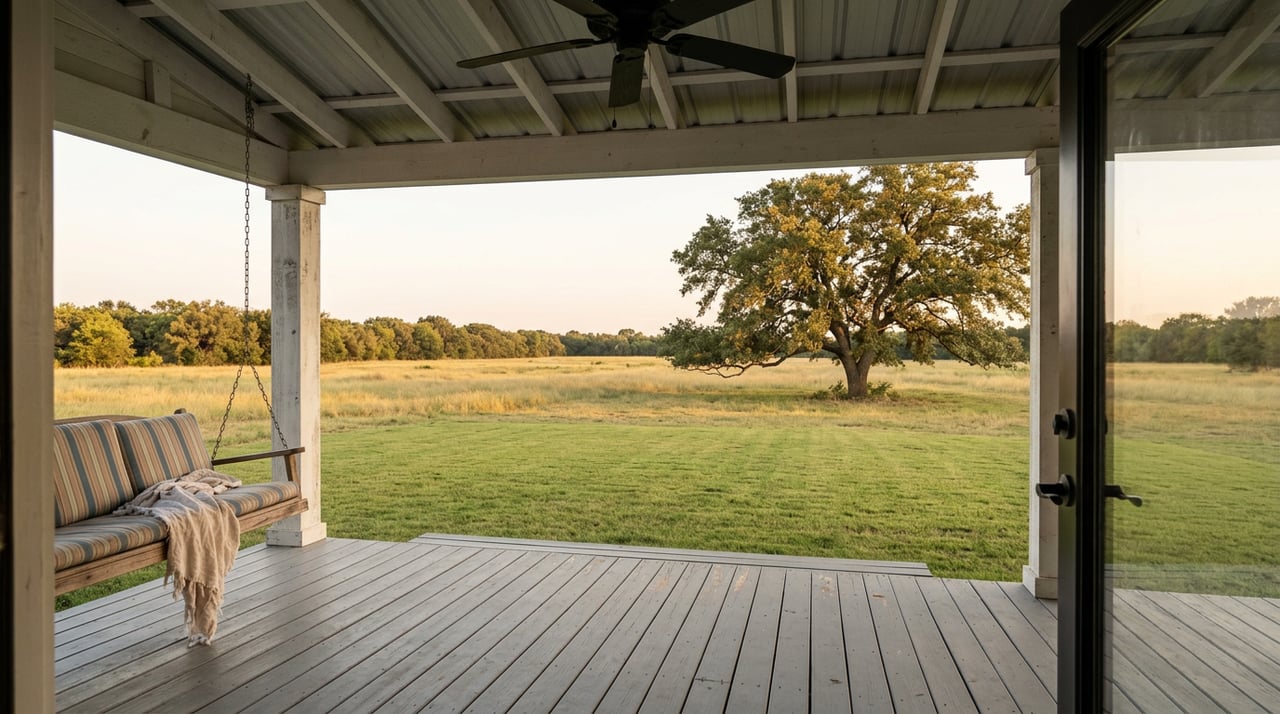
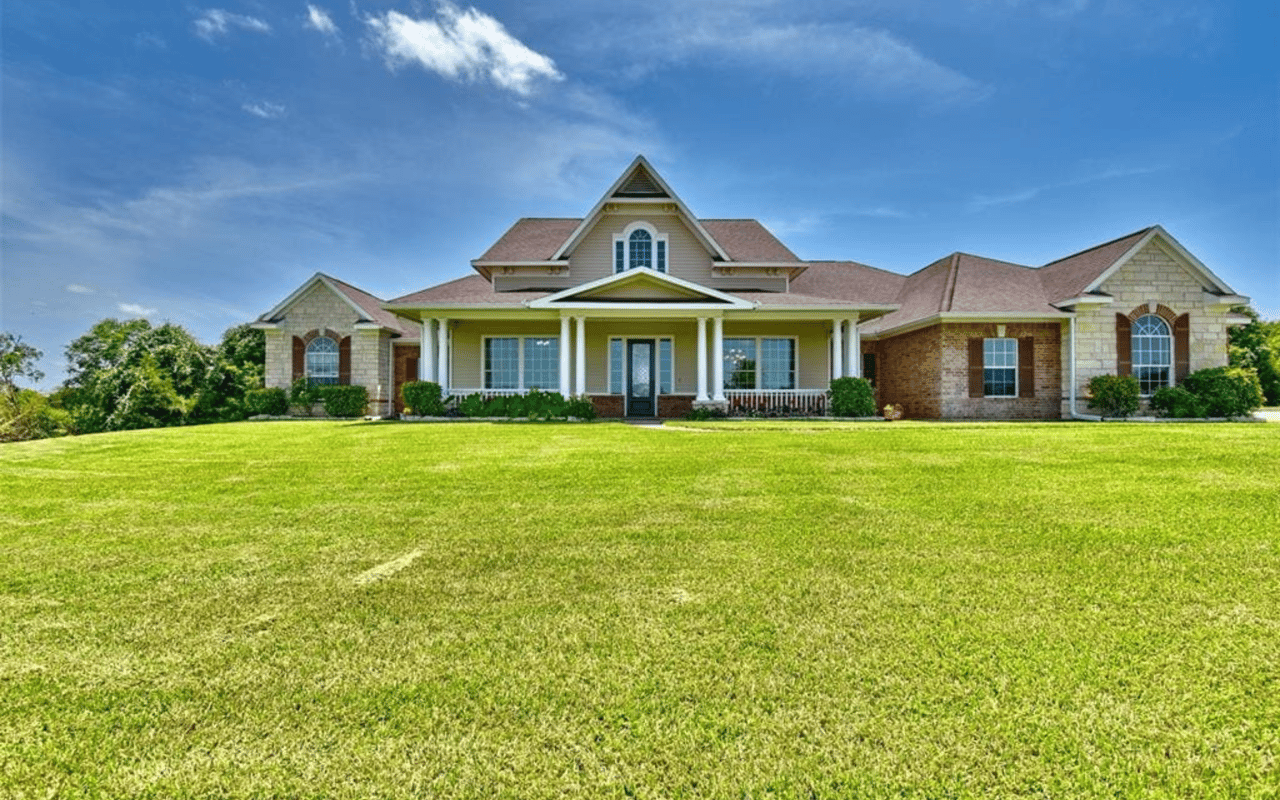
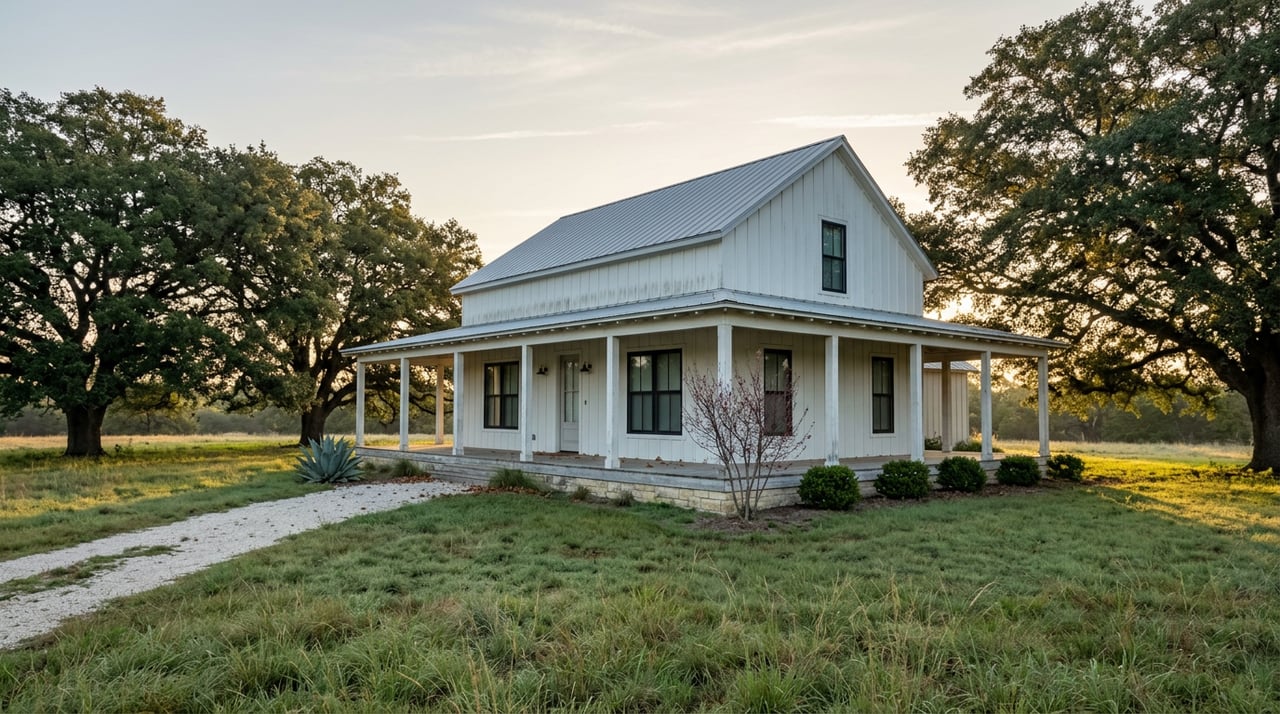
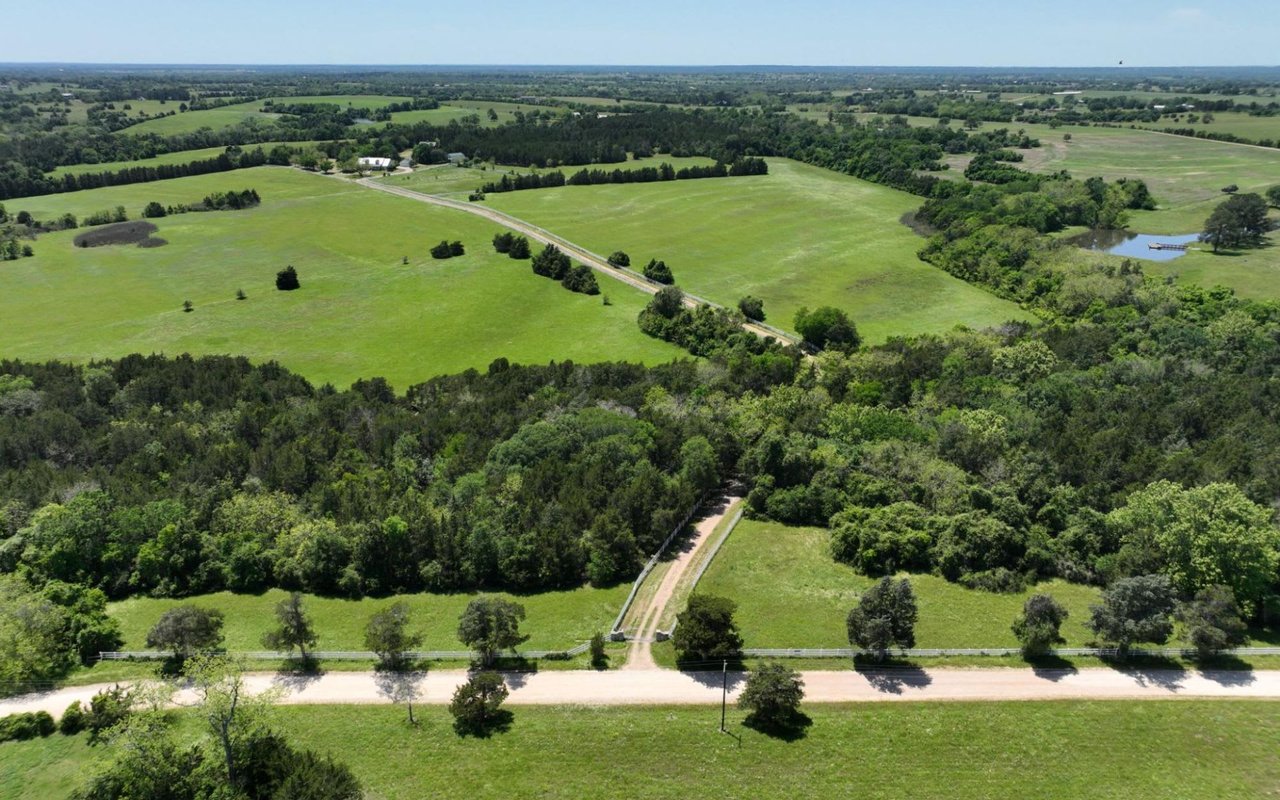
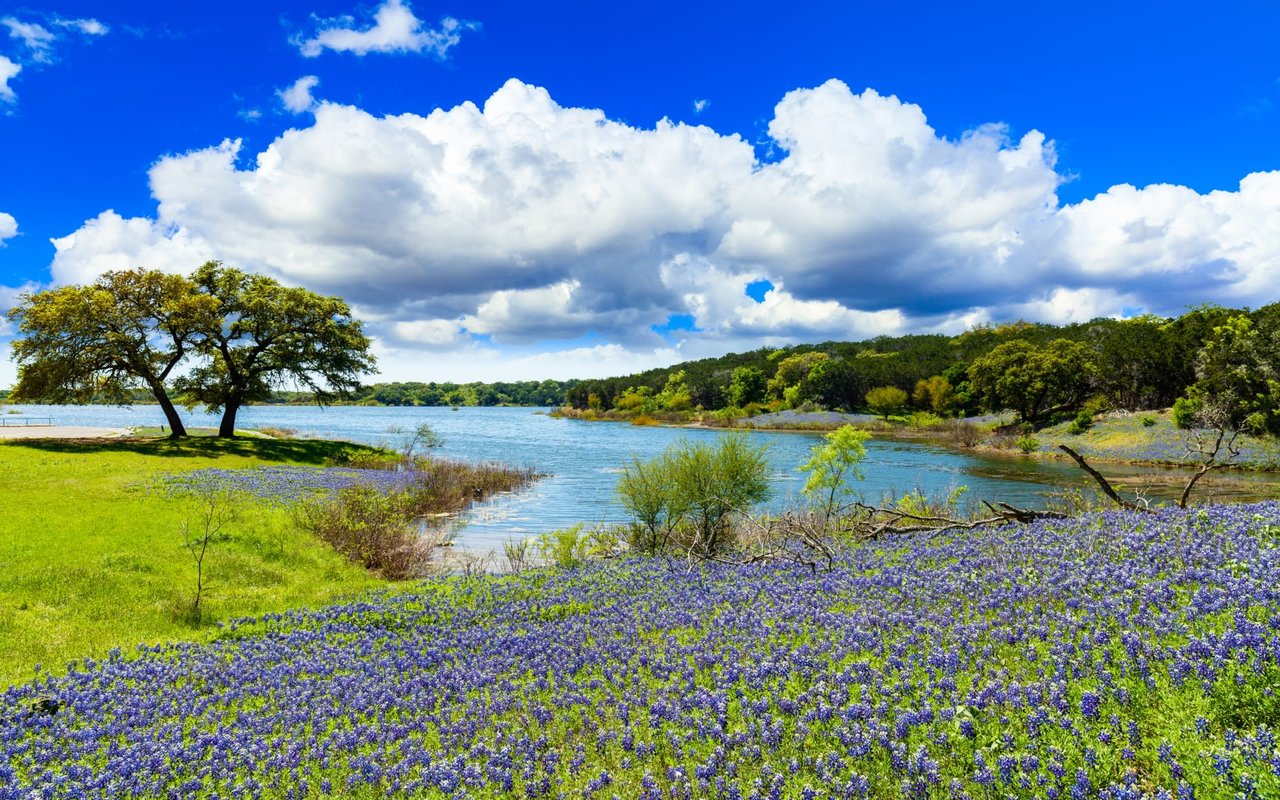
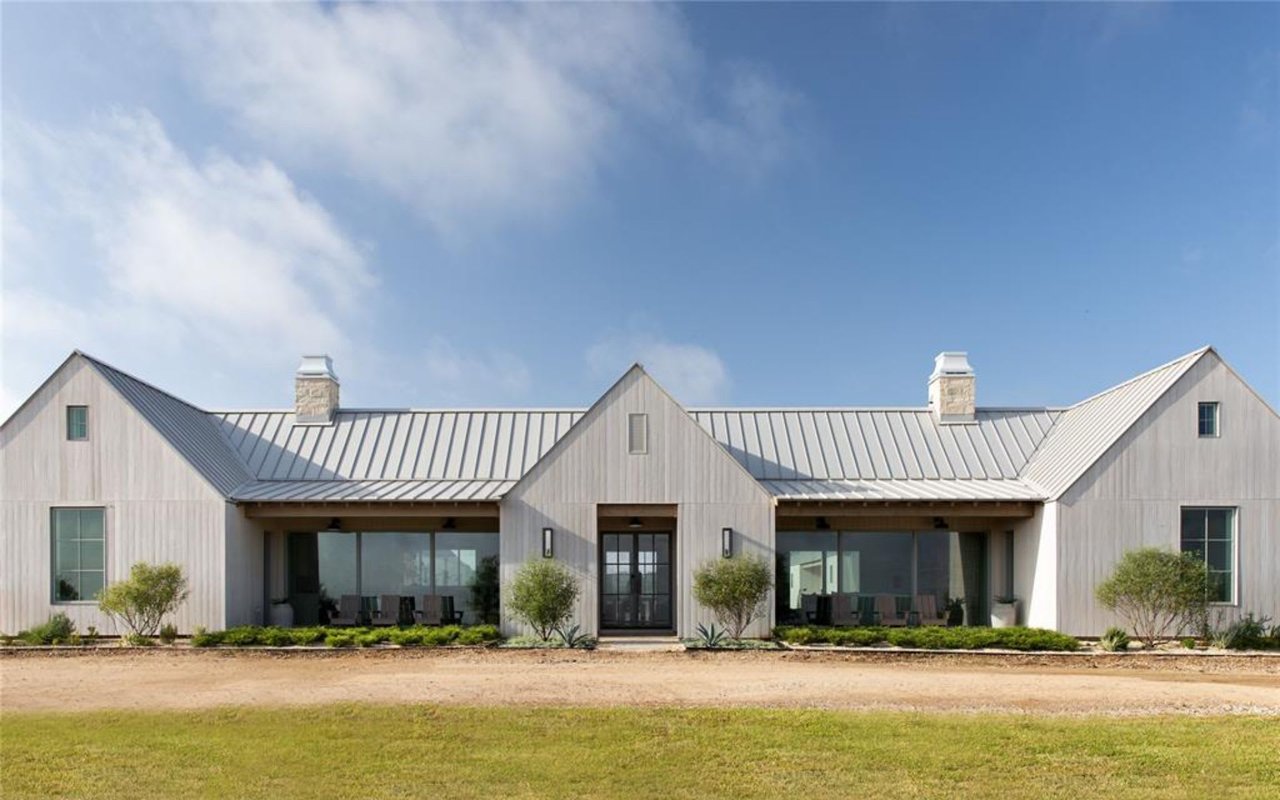
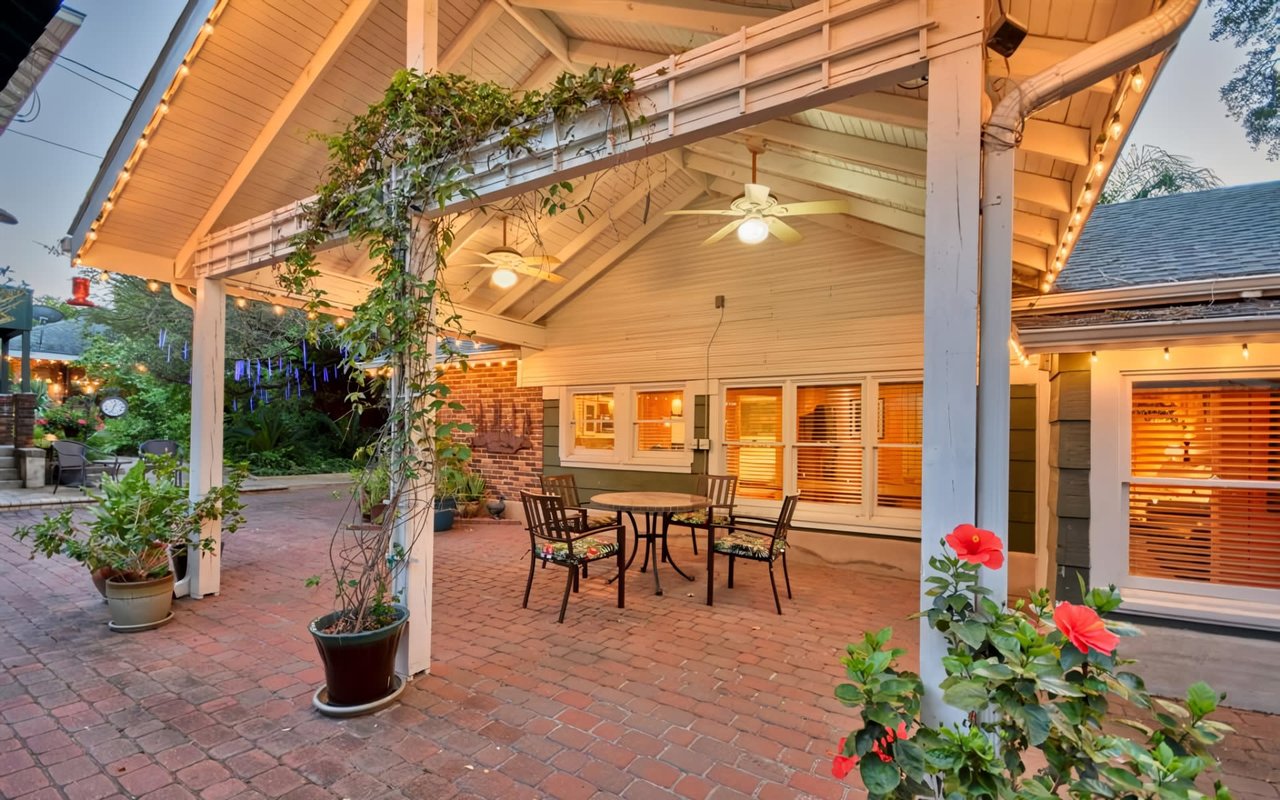
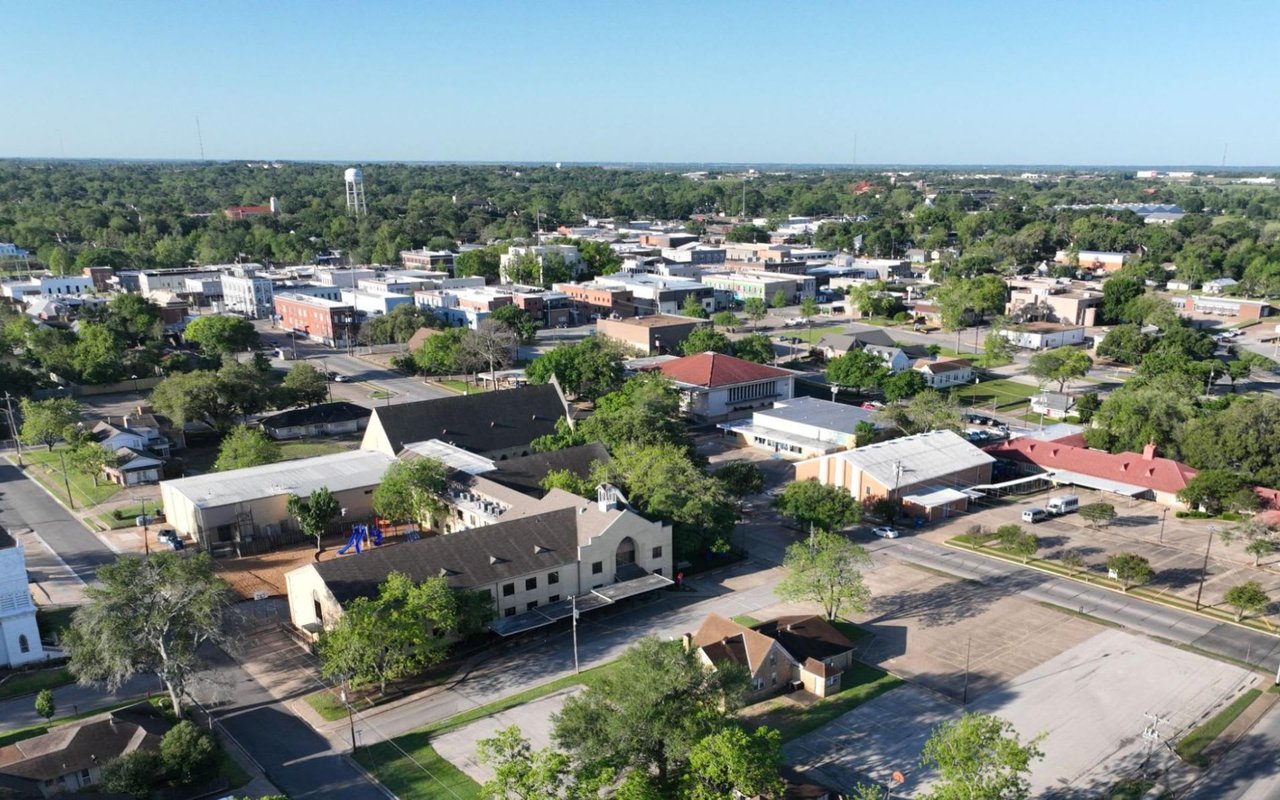
A buyer working from Houston starts the way most acreage shoppers do. They google the average price of Texas land, land somewhere around $5,000 an acre, and start scrolling listings near Burton with that number in their head. Then a 12-acre tract outside town comes up asking for something closer to $30,000 an acre, and the math stops making sense. Nothing in the listing photos explains a 6x markup. There's no mineral rights callout, no commercial zoning, no obvious catch. Just rolling pasture, a stand of live oaks, and a price that looks like a typo until you check three more listings and see the same range repeat.
It isn't a typo. It's a different market wearing the same units.
The Number Doesn't Match the State
Texas rural land priced at $5,246 per acre statewide as of the first quarter of 2026, according to Texas A&M's Real Estate Research Center, up 6.02 percent from a year earlier. Even the hottest broad region in the state, the Austin-Waco-Hill Country corridor, closed out 2025 at a record $7,704 per acre, per Texas Farm Credit's 2026 land pricing guide, with sales volume up 5.7 percent as buyers kept showing up despite the run-up.
Burton doesn't fit inside either number. Active listings across the Burton area currently average around $30,859 per acre, based on roughly 590 acres of land currently marketed for sale. Even the entry point of the market runs hot: a subdivided tract at Oak Crest Estates, one of the small-lot developments carved out of former ranchland near town, lists 3.33 acres for $61,900 cash, or as low as $11,900 down with payments of $690.75 a month over ten years. That works out to roughly $18,589 an acre for what's essentially a bare homesite with no house on it yet, already more than double the statewide average and well above the Hill Country region's record.
| Benchmark | Price per acre | Period |
|---|---|---|
| Texas rural land, statewide average | $5,246 | Q1 2026 |
| Austin-Waco-Hill Country region, record high | $7,704 | 2025 |
| Oak Crest Estates, entry-level subdivided tract | ~$18,589 | 2026 listing |
| Burton-area land, blended listing average | $30,859 | 2026 |
That staircase is the whole story. Each step up isn't explained by better soil or higher cattle capacity. It's explained by what's fifteen minutes down the road.
What the Price Tag Is Actually Buying
Look at how the listings themselves describe the land, and the pitch almost never mentions farm output. A tract near Highway 237 gets marketed for its frontage and its fit for a tiny home village or an antique venue, not its hay yield. Another parcel a half mile off Highway 290 gets pitched as a hay meadow, a homesite, or a commercial conversion, buyer's choice. A five-acre tract with a pond gets sold on the strength of its views and its short drive into town, with the agricultural exemption mentioned almost as an afterthought, a tax feature rather than the reason to buy.
What does get top billing, consistently, is distance. Listings measure themselves against Round Top's twice-yearly antique show, against Royers, against Festival Hill Institute, against Rocky Creek Park on Lake Somerville, against a well-known local stop like Wild Bill's. One 50-acre ranch pitches itself on being 45 minutes from Austin, an hour from Houston, and 20 minutes from Round Top's antique weekend. A community called Fuchs Meadows, sitting in the scenic hills of Washington County, sells its homesites on unbroken views and a ten-minute drive into Round Top's dining and shopping, not on what the acreage could produce.
That's the mechanism. Burton land isn't priced like farmland with a view. It's priced like a second home that happens to come with acreage attached, and second homes get valued on proximity to the thing people are driving out for, not on what the dirt can grow.
The Ranch That Became a Subdivision
Gruenfelden Farms makes the shift visible in one property. The name is Dutch for green fields, and the land was most recently run as a grass-fed cattle operation supplying 44 Farms, a real production use with a real buyer on the other end. The current listing still mentions the cattle history, but the pitch that leads is drive time: under 15 minutes to Royers in Round Top, under 15 minutes back to Highway 290 in Brenham. The property is being sold on where it sits, not on what it produces.
Oak Crest Estates shows the same pattern from the other direction. Rather than one buyer taking the whole tract, the developer split it into 1.8 to 4.2 acre lots and is selling them one at a time, with owner financing built in to reach buyers who want a foothold near Round Top without the capital a full ranch purchase requires. Independence Trail, a smaller community off the La Bahia Trail, does something similar with underground electric already run to the lot line, though water and septic are still on the buyer to install. In each case, land that once made sense as one working parcel is being cut smaller because the smaller pieces sell to more people, faster, at a higher price per acre than the whole would have fetched from a single ranching buyer.
This is worth sitting with if you're comparing a 50-acre working property to a 5-acre homesite and assuming the per-acre price should land somewhere close. It won't. The two are being priced by different logic entirely.
What Actually Moves That Number
Once proximity is the driver, a handful of details separate one Burton-area listing from another far more than acreage count does.
- Distance to Round Top and Brenham. Listings within a ten to fifteen minute drive of Round Top's antique circuit price noticeably higher than comparable acreage thirty minutes out, even within the same county.
- Restricted versus unrestricted. Unrestricted tracts get marketed for flexible, non-farm uses, from RV pads to small commercial ventures, which widens the buyer pool and lifts the price relative to a deed-restricted lot with limited use.
- Utilities already in place. A tract with an electric pole and a 30-amp connection already run, needing only a well for water, is a different cost basis than one requiring a full well, septic, and electric build-out from the road.
- Agricultural exemption status. An ag exemption lowers the carrying cost of ownership through reduced property taxes, but it doesn't set a ceiling on the purchase price. Plenty of ag-exempt tracts near Burton are still priced at the proximity rate, not the farmland rate.
- Tract size relative to the surrounding development pattern. A small lot inside a platted community like Oak Crest carries different comparables than a standalone 50-acre parcel, even if both sit within a few miles of each other.
None of these show up in a simple price-per-acre average, which is exactly why the blended Burton number can mislead a buyer comparing two specific tracts side by side.
What This Means If You're Cross-Shopping
If you're weighing Burton against another part of Washington County, or against acreage further out where the sticker price looks friendlier, the honest comparison isn't acres to acres. It's proximity to proximity. A tract thirty minutes from Round Top priced at half the per-acre rate isn't necessarily a better deal. It's a different product, bought by a different kind of buyer, for a different reason.
That's the piece worth having someone local walk through before you make an offer, because the comparable that looks cheapest on paper is often just further from the thing that made Burton worth considering in the first place.
A Few Questions Worth Answering Directly
Is Burton overpriced compared to the rest of Washington County? Not necessarily. The premium tracks distance to Round Top and Brenham more than it tracks the town of Burton specifically. Land further from that corridor, even within the same county, tends to price closer to the regional average.
Does an agricultural exemption make the land cheaper to buy? It lowers the annual property tax bill, not the purchase price. Plenty of ag-exempt tracts near Burton still carry the full proximity premium.
Why would a 3-acre lot cost more per acre than a 50-acre ranch nearby? Because they're priced by different logic. Small subdivided homesites are valued as a place to build, close to Round Top and Brenham. Larger raw tracts are still valued partly on production use, even when that use has stopped.
Land math near Burton rewards someone who's already looked at more than one listing and started asking why the numbers don't line up. If you're at that stage, The Lindi Camaron Team spends its days in these exact comparisons, from raw acreage to working ranches across Washington County. Reach out and we'll walk the specific tract you're looking at against what's actually driving its price, not just its acreage count.